
Midlife is not a step backward. For many women, perimenopause and menopause bring a new clarity about who they are, what they want and what they will no longer accept. You are not losing yourself. Your standards are moving forward.
Somewhere between the first night sweat and the twelfth month without a period, the world starts whispering a story about you. It says you are winding down. That you are past your prime. That the best is behind you.
We are here to tell you something different. That story was never yours.
What actually changes during menopause?
Menopause is a natural part of biological ageing. According to the World Health Organization, most women experience it between the ages of 45 and 55, and it is confirmed after 12 consecutive months without a period. The U.S. National Institutes of Health puts the average age at 51. Before that comes perimenopause, a transition that can last several years and can affect physical, emotional, mental and social well-being.
Those changes are real. Sleep can shift. Moods can swing. Bodies can feel unfamiliar. None of that should be minimized, and none of it should be faced in silence. If your symptoms are affecting your life, you deserve care from a qualified health professional who takes you seriously.
But here is what the clinical definitions leave out: the WHO itself notes that menopause can offer an important opportunity to reassess one's health, lifestyle and goals. That is not a footnote. That is the headline.
Why it can feel like you are going backward
It is easy to mistake change for loss. The body that once ran on autopilot now asks for attention. The roles that defined you, caretaker, peacekeeper, the one who always says yes, start to feel tight, like clothing that no longer fits.
So you pull back. You say no more often. You lose patience with small talk, half-hearted apologies and meetings that should have been emails. People notice. Some call it moodiness. Some call it a crisis.
We call it something else: standards.
Your standards are moving forward
What looks like retreat is often recalibration. After decades of performing a version of yourself for everyone else, you begin to choose. You choose rest without guilt. You choose friendships that feed you. You choose work that respects you, or you leave. You choose to be seen exactly as you are.
That is not going backward. That is a woman refusing to shrink.
- In relationships: you stop accepting less than mutual respect.
- At work: you know your value and say it out loud.
- With your body: you trade punishment for partnership, moving because it feels good, not to disappear.
- With your time: you protect it like the luxury it is.
How to honor the woman you are becoming
There is no single right way to move through midlife. But women in our community keep coming back to a few rituals that help them stay rooted in themselves:
- Name what you will not tolerate anymore. Write it down. Clarity is power.
- Get informed care. Track your symptoms and bring them to a clinician who listens. You do not have to "just live with it."
- Move with intention. Strength training, walking and yoga are about feeling powerful in your body, not about shrinking it.
- Find your people. Talk openly with women who are walking the same road. Silence makes everything heavier.
- Dress like the woman you are now. Not the one you were told to be.
Why we wear it on our backs
Menopausal Monster® began with a simple belief: this chapter deserves a uniform. Not clothing designed to soften, fix or hide her, but pieces that say it plainly.
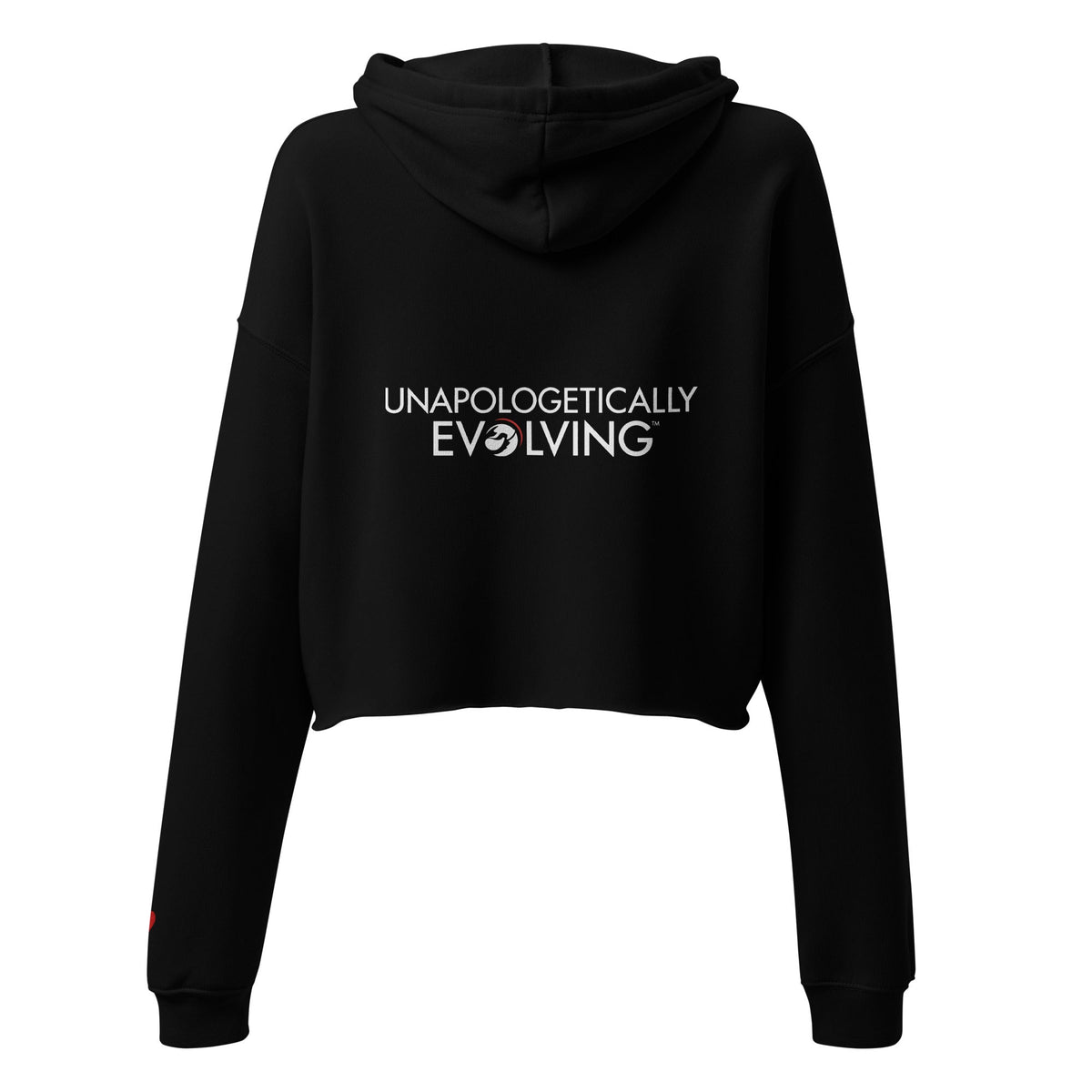
That is why Unapologetically Evolving™ runs across the back of our Unapologetically Evolving Cropped Hoodie and our heavyweight Relaxed Hoodie. It is a statement for the room you walk into and a reminder for the mirror on your way out the door. Pair either with our high-rise Luxe Leggings and you have a set made for errands, workouts and every boundary in between.
Every piece is made to order just for you and shipped worldwide to the countries available at checkout, with a size guide in both inches and centimeters so the fit feels like yours from the first wear.
Key takeaways
- Menopause usually happens between 45 and 55, with an average age of 51, and is confirmed after 12 months without a period.
- The changes are real, and you deserve informed, respectful care.
- Saying no, pulling back and choosing yourself are signs of rising standards, not decline.
- This is a beginning: a chance to reassess your health, priorities and goals on your own terms.
You are not going backward. You are finally moving at your own pace, in your own direction, by your own rules.
Questions women ask us
Is menopause the end of something or the beginning?
Biologically, menopause marks the end of menstrual periods, confirmed after 12 consecutive months without one. Emotionally, many women describe it as a beginning: a time to reassess their health, priorities and goals, and to stop living by other people's expectations.
What does it mean that your standards are moving forward?
It means the changes of midlife often come with sharper clarity about what you will and will not accept, in relationships, at work and in how you spend your time and energy. Raising your standards is a sign of growth, not decline.
When does menopause usually happen?
Most women reach menopause between ages 45 and 55, and the average age in the United States is 51. Perimenopause, the transition before it, can begin years earlier.
What is Menopausal Monster®?
Menopausal Monster® is a women's apparel and lifestyle brand born in New Jersey for women moving through perimenopause, menopause and beyond. Its pieces carry the message Unapologetically Evolving™ and are made to order and shipped worldwide.
This story is for inspiration and general information only and is not medical advice. Please speak with a qualified health professional about your own health.